Security Architecture
Understanding Denial-of-Service Risks Across API Endpoints
Why rate limiting alone is insufficient and how to build a layered, cost-aware defense strategy.
1) Problem Statement
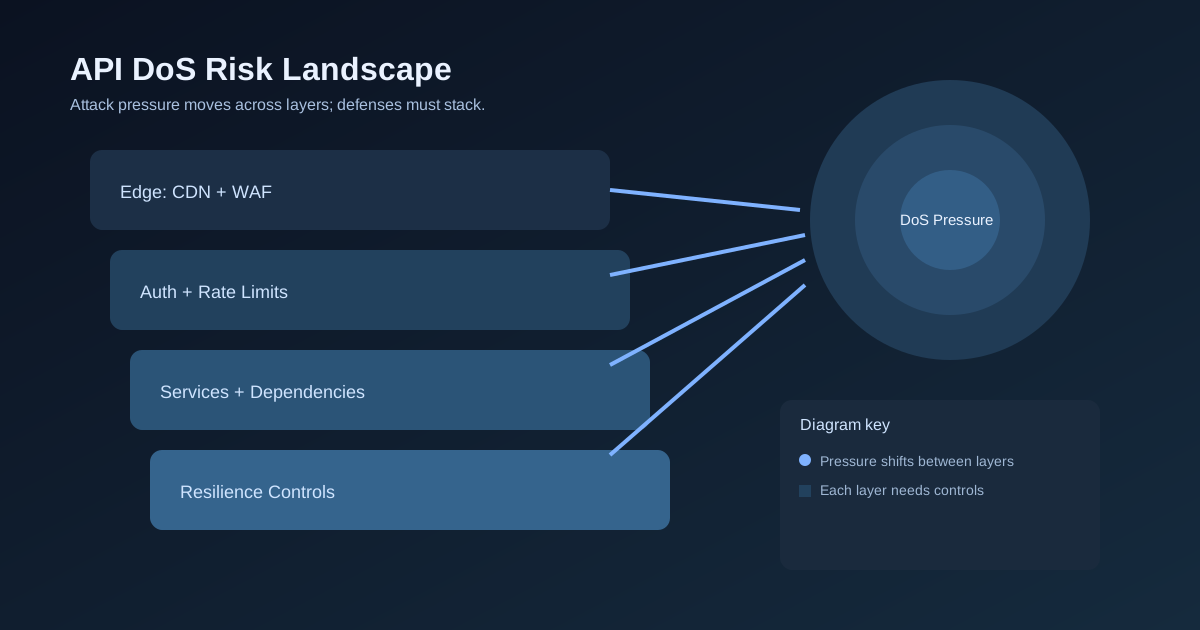
APIs are built to be scalable and accessible, but those same traits create opportunities for DoS disruption. Even protected endpoints must process requests far enough to determine access rights, which consumes resources. Attackers exploit asymmetric cost and shared dependencies to degrade availability without needing valid credentials.
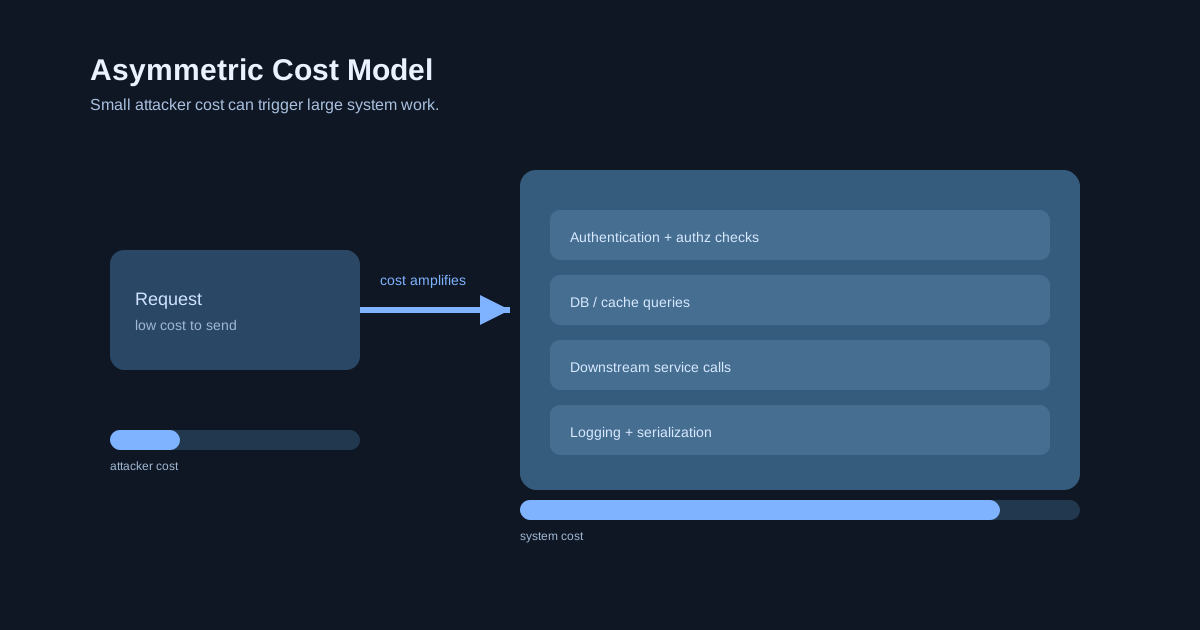
A single API call can trigger authentication checks, database queries, cache interactions, logging, serialization, downstream service calls, and external integrations. Attackers leverage this amplification to exhaust CPU, memory, or dependency pools with relatively low effort.
DoS attacks rarely target every layer simultaneously. They focus on saturating one dependency so failures cascade across the stack.
2) How DoS Conditions Are Commonly Reproduced
These patterns are observed frequently in the field and are described here without procedural detail.
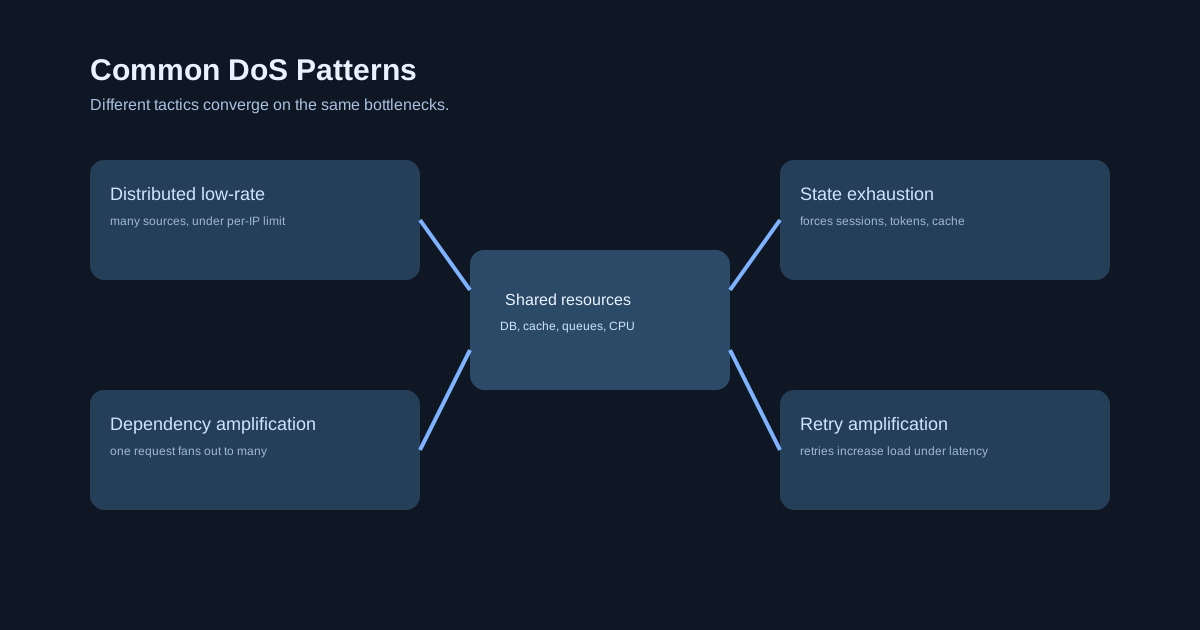
Distributed Low-Rate Flooding
Traffic is spread across many IPs so each source stays below per-key limits while cumulative load exhausts shared capacity.
State Exhaustion
Endpoints that create sessions, tokens, or temporary records are targeted to force unbounded state growth.
Dependency Amplification
A single request fans out to multiple internal or third-party services, amplifying the attacker’s leverage.
Retry & Timeout Amplification
Retries from clients, SDKs, and load balancers create a feedback loop that adds traffic during instability.
3) Header-Based Bypasses as a Root Cause
Many protections derive identity from request headers. If trust boundaries are not explicit, attackers can spoof headers to evade rate limits or anomaly detection.
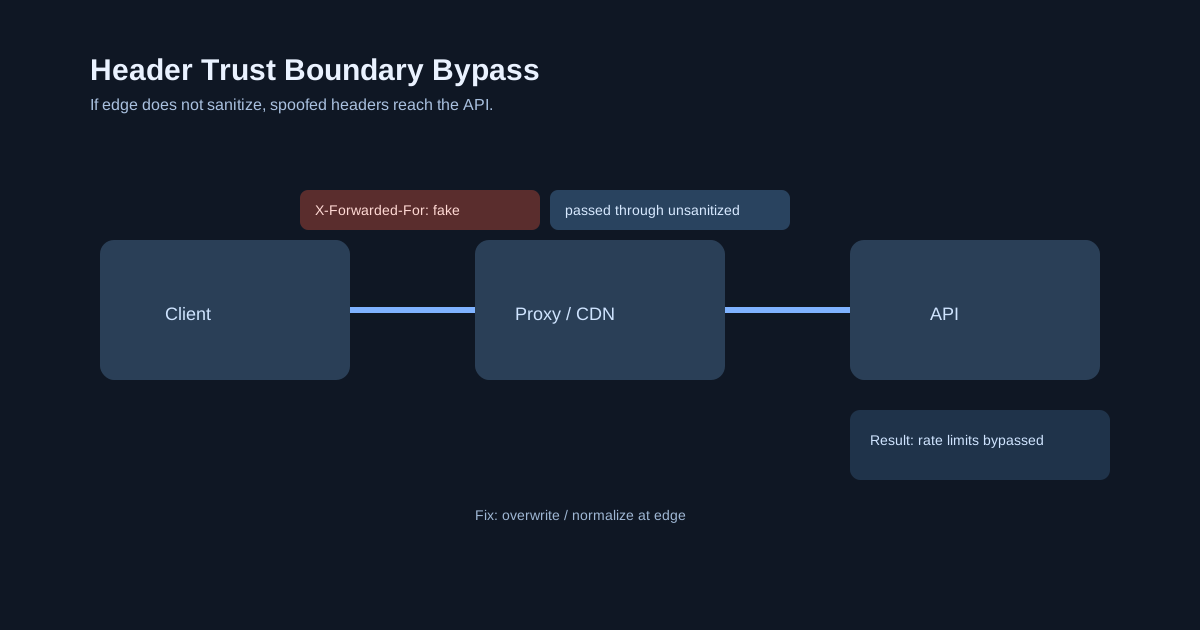
Forwarded IP headers must only be trusted when emitted by known proxies or CDNs. If normalization differs between WAFs, load balancers, and app logic, attackers can appear as multiple logical clients.
The fix is to define and enforce header trust at the network edge and overwrite client-supplied values before they reach application logic.
4) Why Rate Limiting Alone Does Not Solve the Problem
Rate limiting is necessary but incomplete when protecting shared capacity.
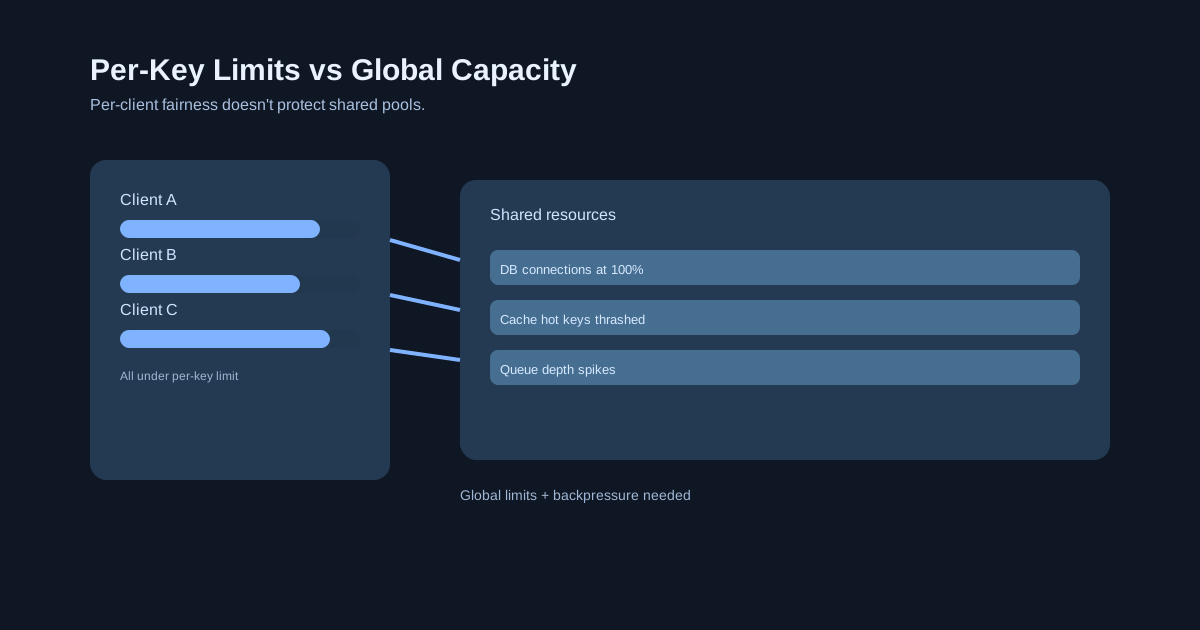
- Per-key limits can be bypassed via distributed traffic.
- Limits may be applied after expensive processing has already occurred.
- Rate-limit stores (e.g., Redis) can become bottlenecks under attack.
- Fairness between clients does not equal protection of shared dependencies.
5) Defensive Strategies and Trade-Offs
Resilient API protection is defense-in-depth. Each layer addresses a distinct failure mode.
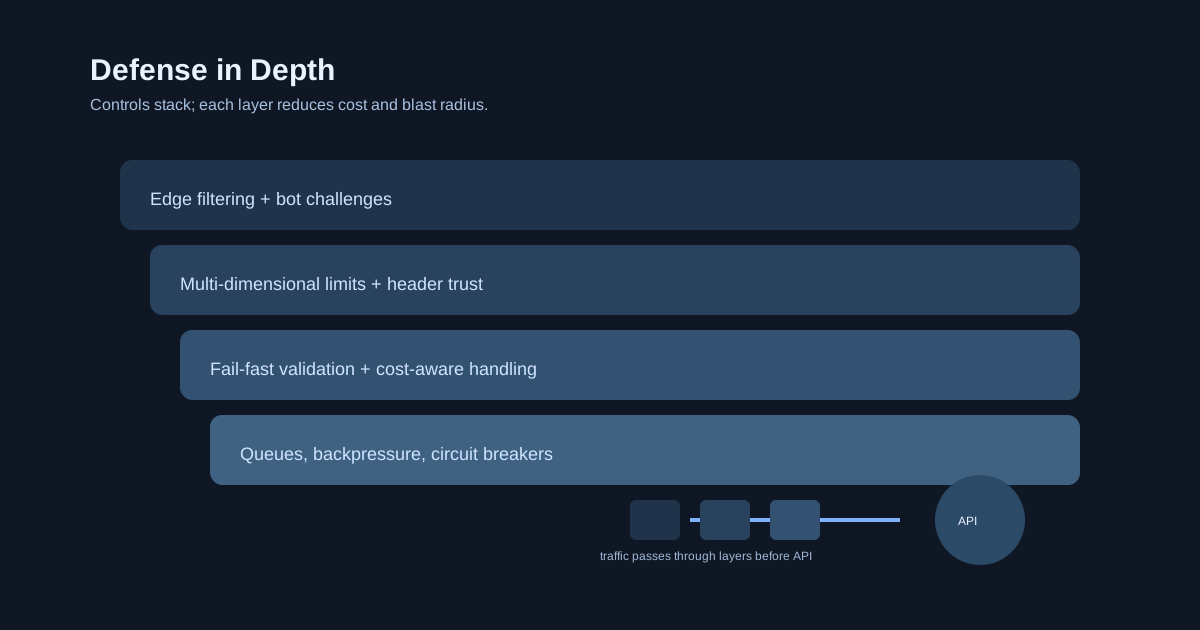
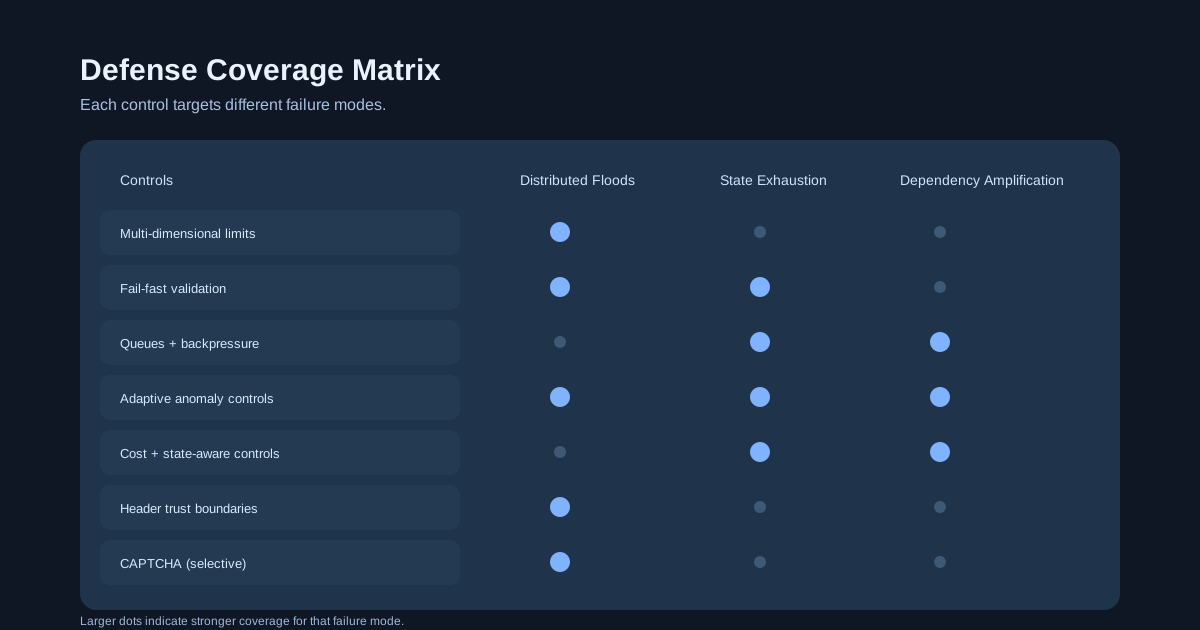
Multi-Dimensional Rate Limiting
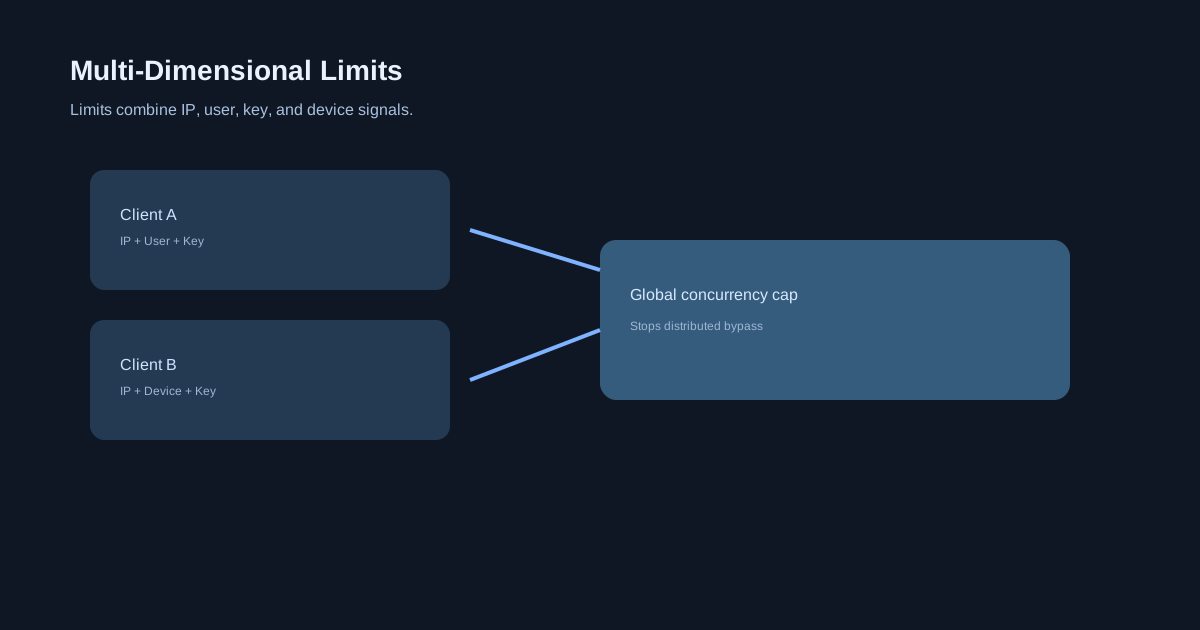
Apply limits across IP, user identity, API key, device fingerprint, and global concurrency to reduce bypass opportunities.
This is most effective when paired with global concurrency caps so distributed traffic cannot overwhelm shared pools even if per-key limits look healthy.
Track false positives on shared networks and tune burst allowances so legitimate traffic is not penalized during launches or peak hours.
Combine with per-endpoint budgets to prevent expensive routes from being starved by higher-volume, lower-cost traffic.
Strict Header Trust Boundaries
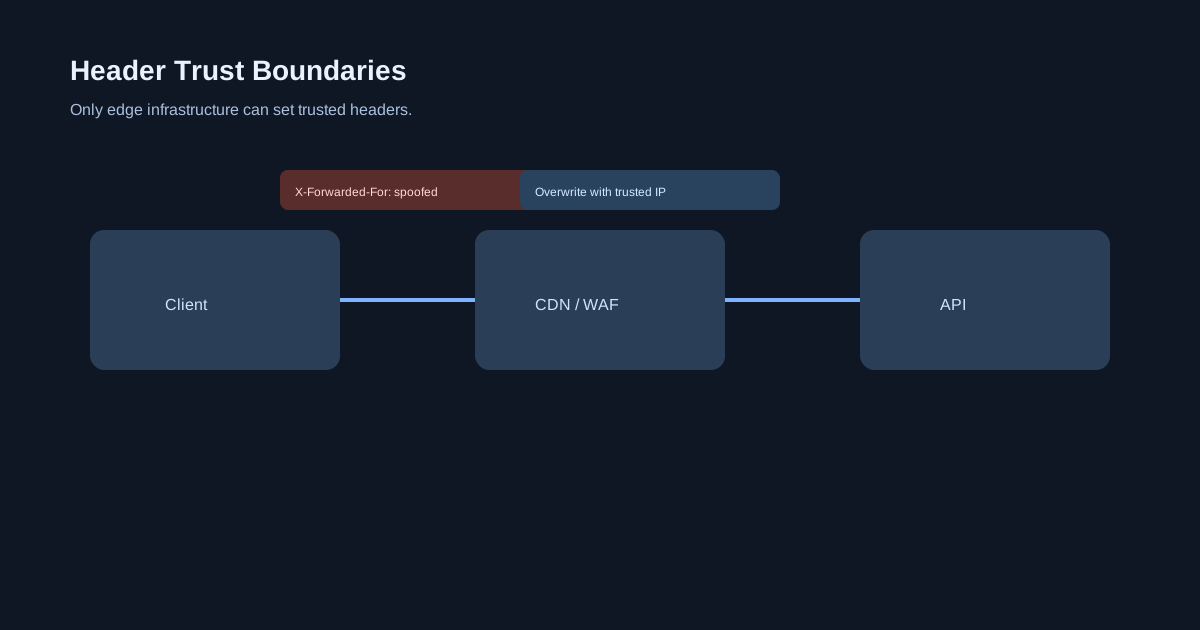
Only trust headers from known infrastructure and overwrite client values at the edge.
Standardize normalization at the WAF or CDN so application logic and rate-limit keys are derived from a consistent identity source.
Document the trust chain explicitly to avoid regressions when proxies change or when new infrastructure layers are introduced.
Ensure logs and alerts use the trusted identity to avoid confusing forensic analysis during incidents.
Early Rejection & Fail-Fast Design
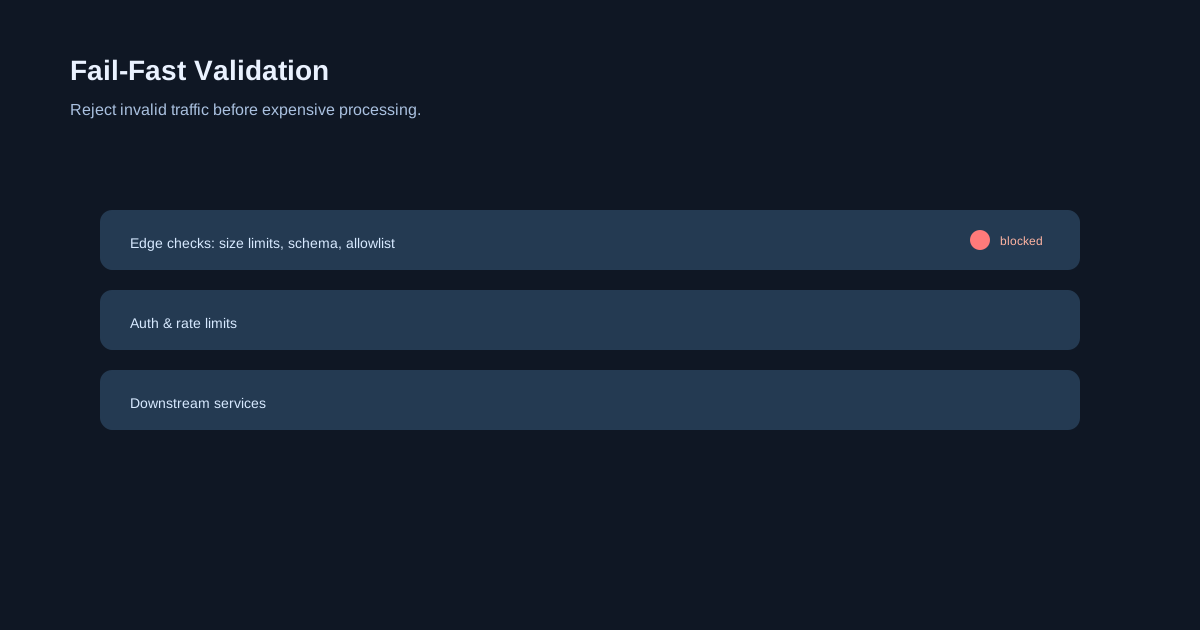
Reject abusive requests before hitting auth, DB, or downstream services.
Lightweight validation and schema checks at the edge reduce CPU amplification and prevent expensive work from being scheduled in the first place.
Prefer cheap allowlists and strict payload limits before parsing large bodies or performing cryptographic checks.
Make fail-fast behavior observable with clear metrics so you can distinguish blocked traffic from genuine errors.
Cost- & State-Aware Controls
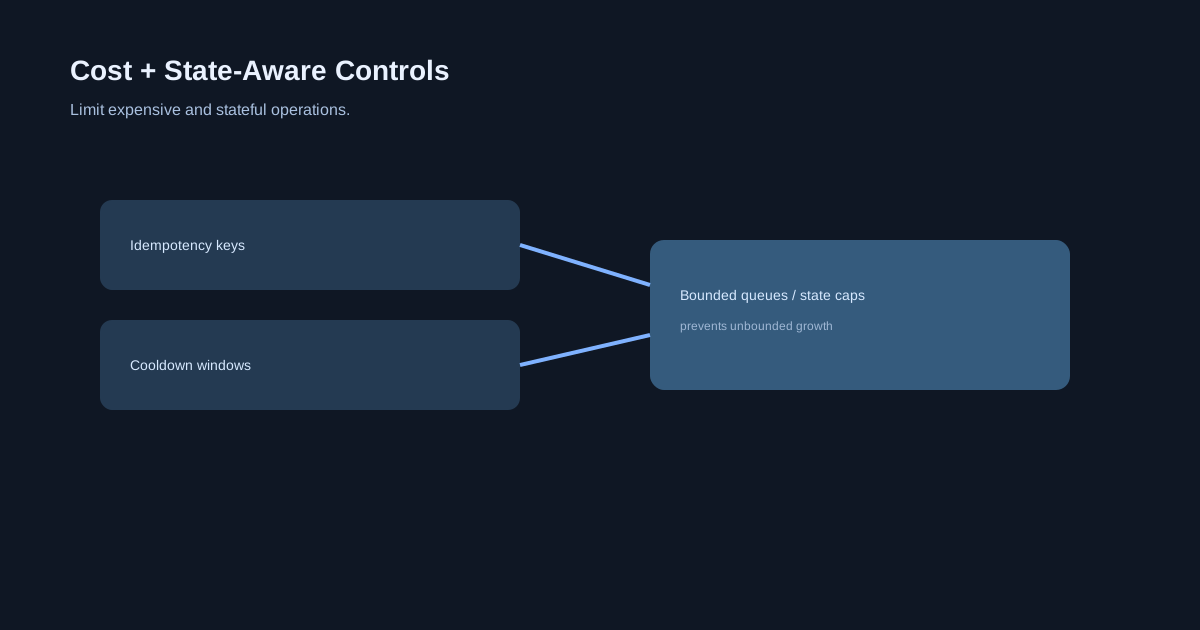
Cap expensive operations, suppress duplicates, and limit server-side state growth.
Use cooldown windows, idempotency keys, and bounded queues to stop repeated work from inflating storage or compute costs.
Expose clear retry guidance in API responses so clients do not amplify load when you intentionally throttle expensive operations.
Prioritize state caps on endpoints that create records or jobs to avoid runaway storage and reconciliation overhead.
Queues, Backpressure, Circuit Breakers
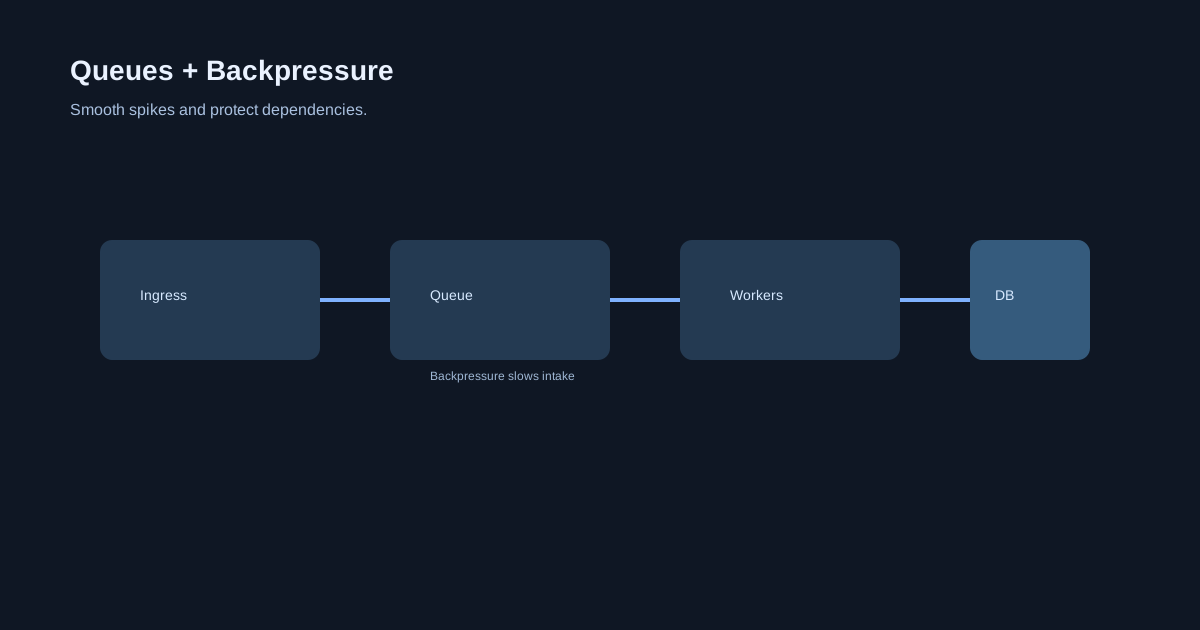
Decouple intake from processing to prevent cascading failures during spikes.
Backpressure ensures critical paths keep moving while less important workloads are delayed or dropped safely.
Use circuit breakers to isolate failing dependencies and degrade gracefully rather than spreading timeouts across the fleet.
Monitor queue depth and worker saturation so capacity decisions are data-driven.
Adaptive Anomaly Controls
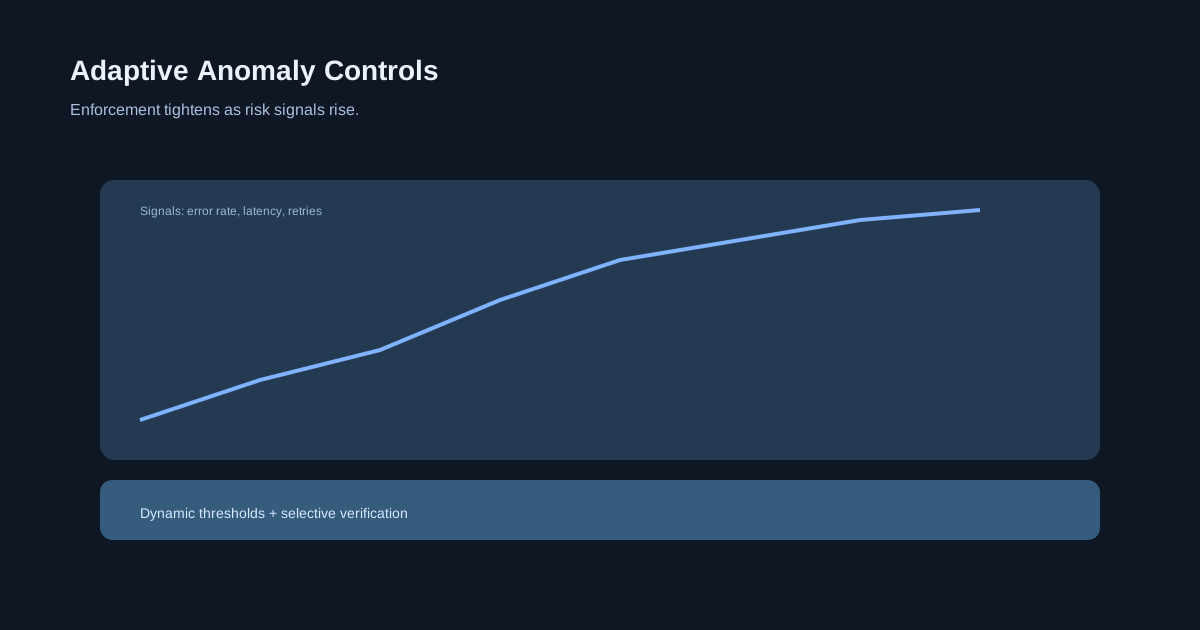
Dynamically adjust enforcement based on error rates, latency, or unusual traffic patterns.
When signals spike, tighten thresholds or require additional verification for suspicious segments without blocking healthy traffic.
Keep rules auditable with dashboards so operators can understand why enforcement changed and roll back safely.
Combine anomaly scoring with allowlisted partners to avoid unintended disruption.
CAPTCHA and Human Verification
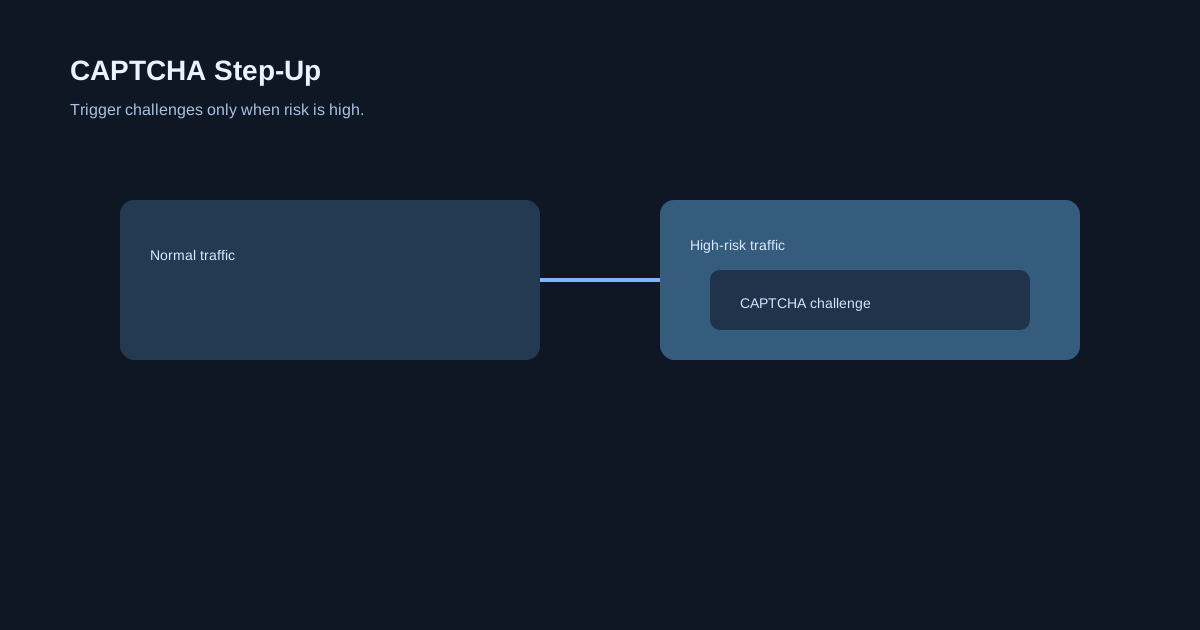
Use CAPTCHA as a step-up control when behavior looks automated or abusive.
It is most effective on human-facing endpoints and should be triggered selectively to avoid unnecessary friction for legitimate users and service-to-service traffic.
Combine CAPTCHA with risk scoring and allow trusted clients to bypass it to preserve automation flows.
Keep a clear fallback path for accessibility and ensure challenges are not used as a permanent gate on high-volume integrations.
Conclusion
API DoS incidents happen when defenses are narrowly scoped. Rate limiting improves fairness, but it cannot address distributed traffic, state exhaustion, dependency amplification, or header-based bypasses on its own.
The most resilient systems combine strict trust boundaries, multi-dimensional controls, cost-aware handling, early rejection, and adaptive response mechanisms. Treat APIs as critical shared infrastructure, not just interfaces.
Comments
Share feedback or questions about this case study.
No comments yet.